
How to Fix a Washing Machine: What You Can Safely Check Yourself, and What a Real Repair Takes
The checks any homeowner can do, and four real Tampa washer repairs that show what is behind the panels
Quick Answer
- Do these yourself
- Check the water taps and inlet hoses, clean the drain pump filter on a front-loader, level the machine, run a cleaning cycle, and look for an error code.
- Stop here if
- Water is coming from under the machine, the drum squeals, grinds or will not spin, the door will not unlock, or the code points to a motor, pump or board.
- Why
- Behind the panels are a motor and control board on household current, spring clamps and sharp sheet metal, and a heavy drum. Front-load door boots and top-load transmissions take special tools and patience.
- What a pro costs
- Our four Tampa washer jobs below ran $150 to $344. The service call is free with any repair.
Searching for how to fix a washing machine usually means it will not drain, will not spin, leaks or makes a terrible noise. Some of that you can solve in a few minutes. The rest means taking the machine apart. Here are the safe checks first, then four washers we repaired in Tampa, with parts, visits and invoices.
Washer leaking, not draining or noisy? Tell us the brand and what it does
We call back within 15 minutes – 8 AM to 7 PM on weekdays and 8 AM to 6 PM on weekends
Before You Touch Anything: Safety
- Unplug the washer before removing any panel. The motor, pump and control board run on household current, and water is everywhere.
- Turn off both water taps behind the machine before touching a hose.
- Expect water: opening a drain filter or hose on a full machine releases several quarts. Have towels and a shallow pan ready.
- Washers are heavy and top-heavy when tipped. Do not tip or walk one out alone.
- Front-load door boots are held by spring clamps that can slip and cut; the cabinet edges are sharp sheet metal.
5 Checks You Can Do Yourself
1. Water taps and inlet hoses
Both taps fully open, hoses not kinked or crushed behind the machine, and the small inlet screens clear. A washer that will not fill often has nothing more wrong than this.
2. The drain pump filter (front-loaders)
Behind a small door at the bottom front. Coins, hair ties and socks block it and stop draining. Put a pan and towels down first; it releases water.
3. Level and load
A washer that walks or bangs during spin is often unlevel or overloaded with one heavy item. Adjust the feet and split the load.
4. Run a cleaning cycle
A bad smell is often just buildup. Run the cleaning cycle with a washer cleaner, wipe the door gasket and leave the door open between washes.
5. Read the error code
Write it down with the model number. It tells you, and a technician, which part to look at. See our Kenmore washer error code guide for how much a code narrows things down.
If none of this solves it, the cause is inside the cabinet. Here is what that looked like on real jobs.
What the Real Repairs Looked Like: 4 Tampa Washers
-
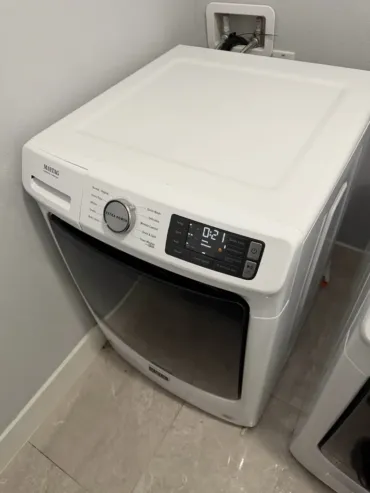
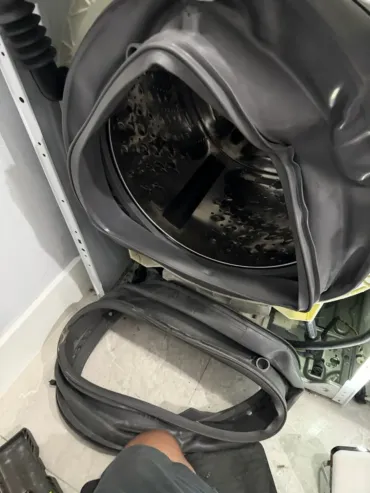
Maytag front-loader: water flooding out of the door
The door boot, the rubber gasket between the drum and the door, was damaged. Replacing it means removing the front clamp ring, the door and often the front panel, then working a new boot (W11314648, $164) onto the drum and refitting two spring clamps. The part had to be ordered: $344 total, two visits.
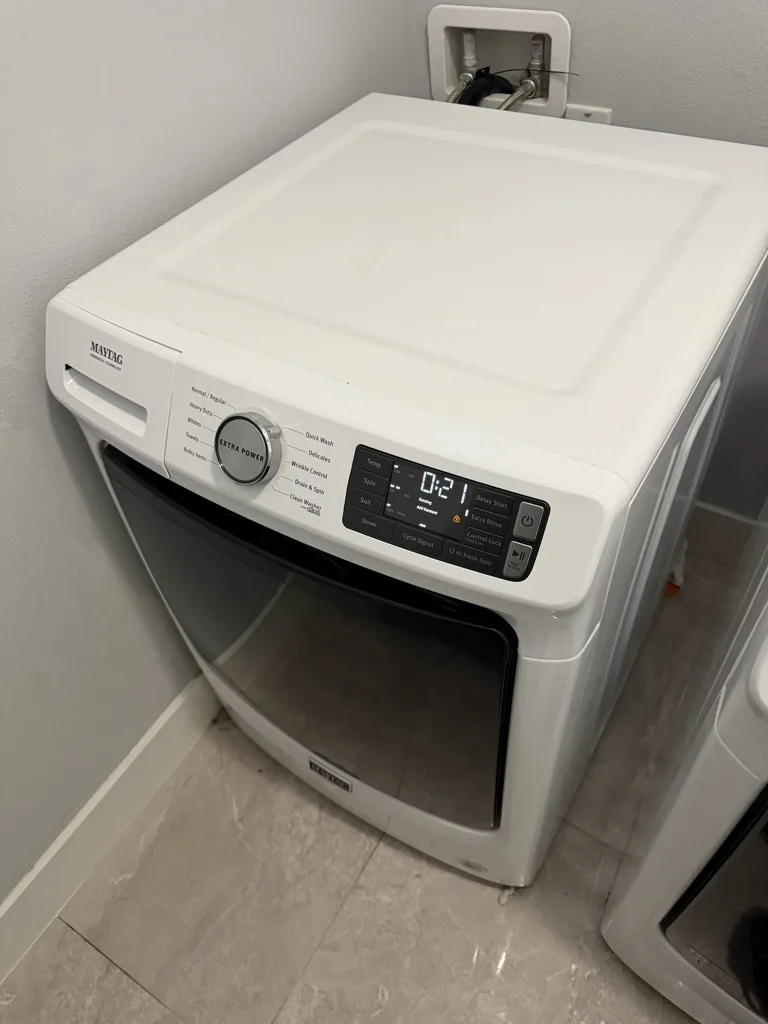
Maytag MHW5630HW0, W Rio Vista Ave. 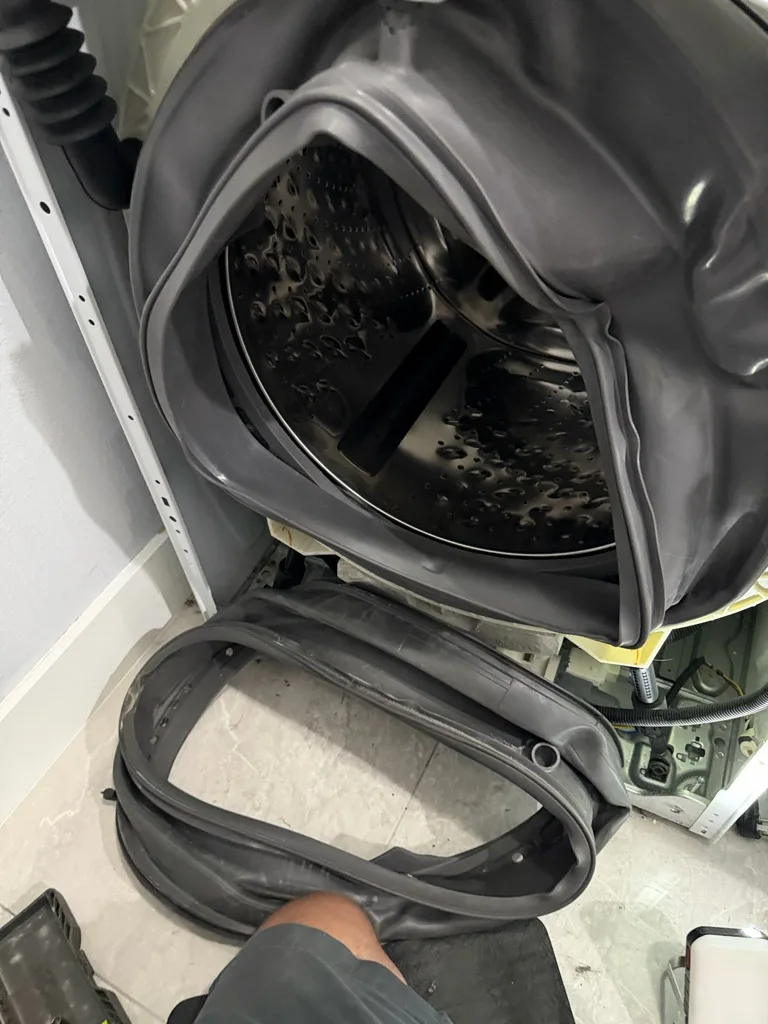
The old door boot, removed. -
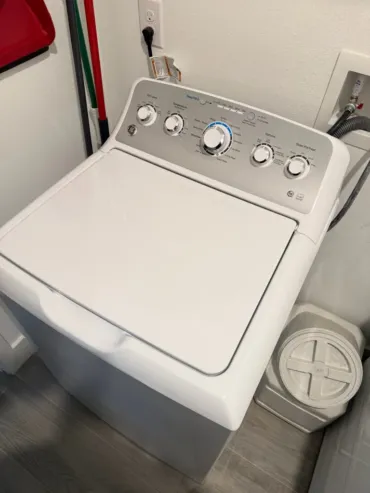
GE top-loader: a loud squeal while agitating
The actuator motor had failed and worn down a transmission pulley. Both were replaced (WH03X30517, $93; WH03X32097, $36), with the parts on the truck: $289 total, one visit. Replacing only the noisy part would have left the worn pulley to fail next.
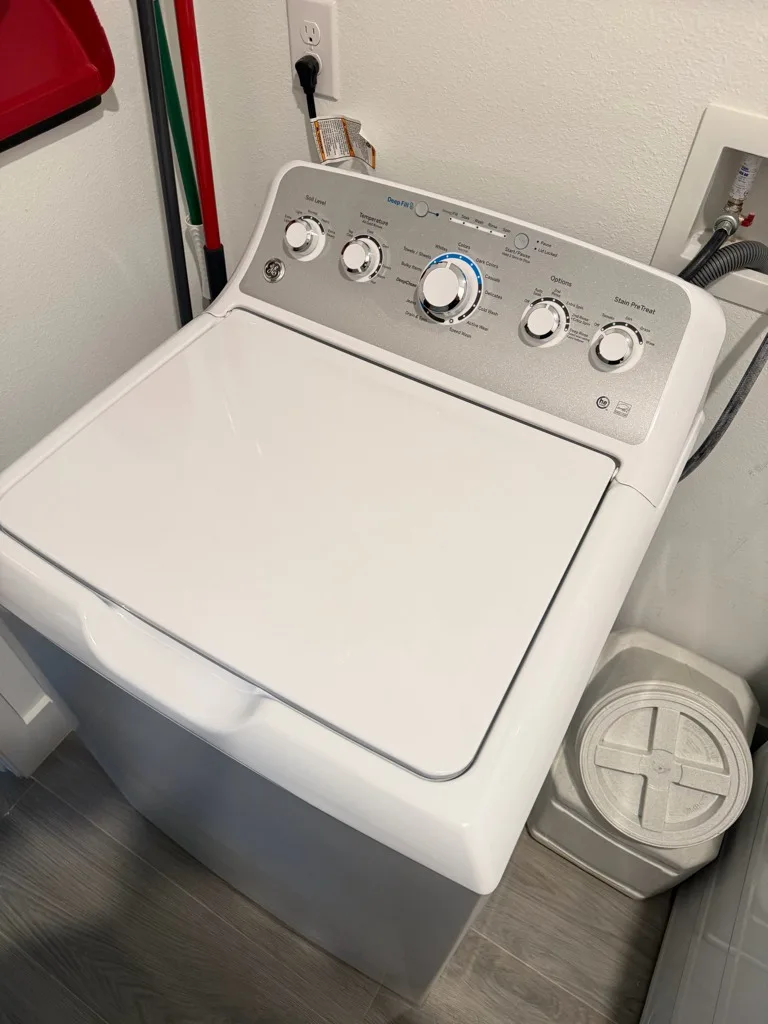
GE GTW490ACJ7WS, S Sherrill St. 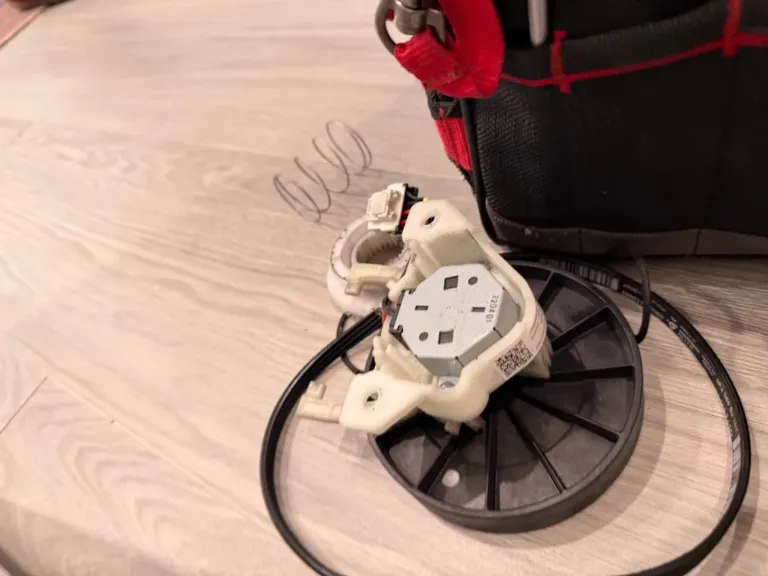
The actuator motor and pulley. -
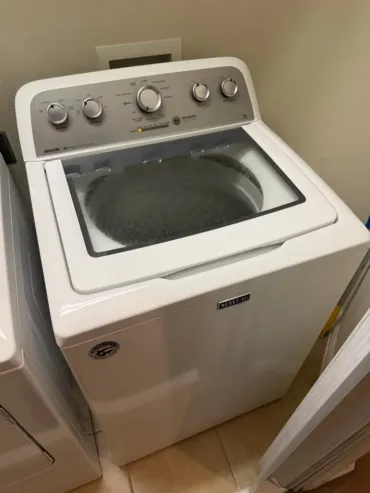
Maytag top-loader: a bad smell and residue behind the drum
Every part worked. The washer was dirty behind the drum, where no cleaning cycle reaches. A full cleaning, no parts: $150, same day. Sometimes the honest answer is that nothing is broken.
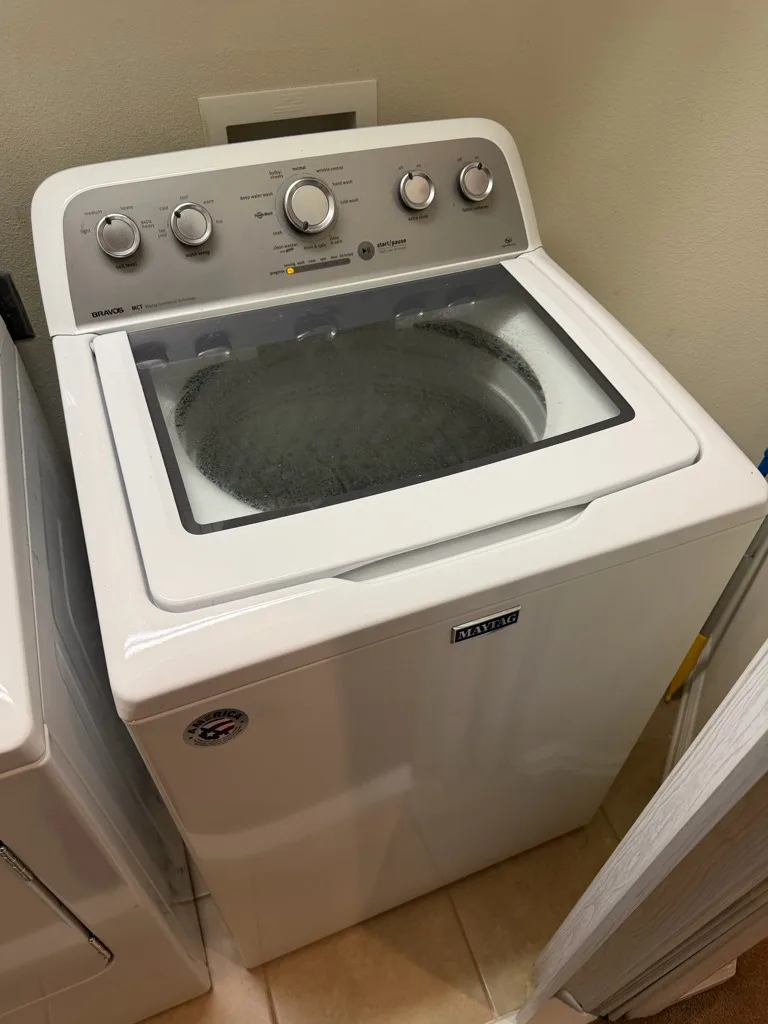
Maytag MVWX655DW1, Big Cypress Way. 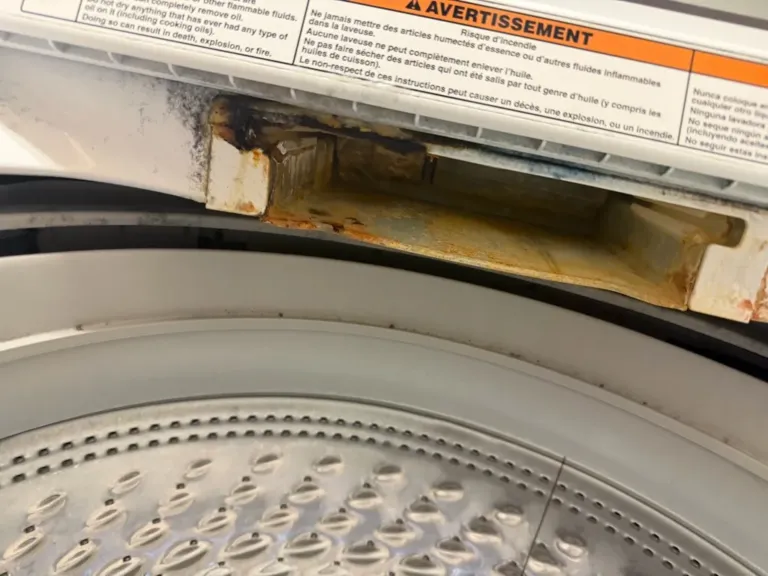
Mold and rust under the dispenser. -
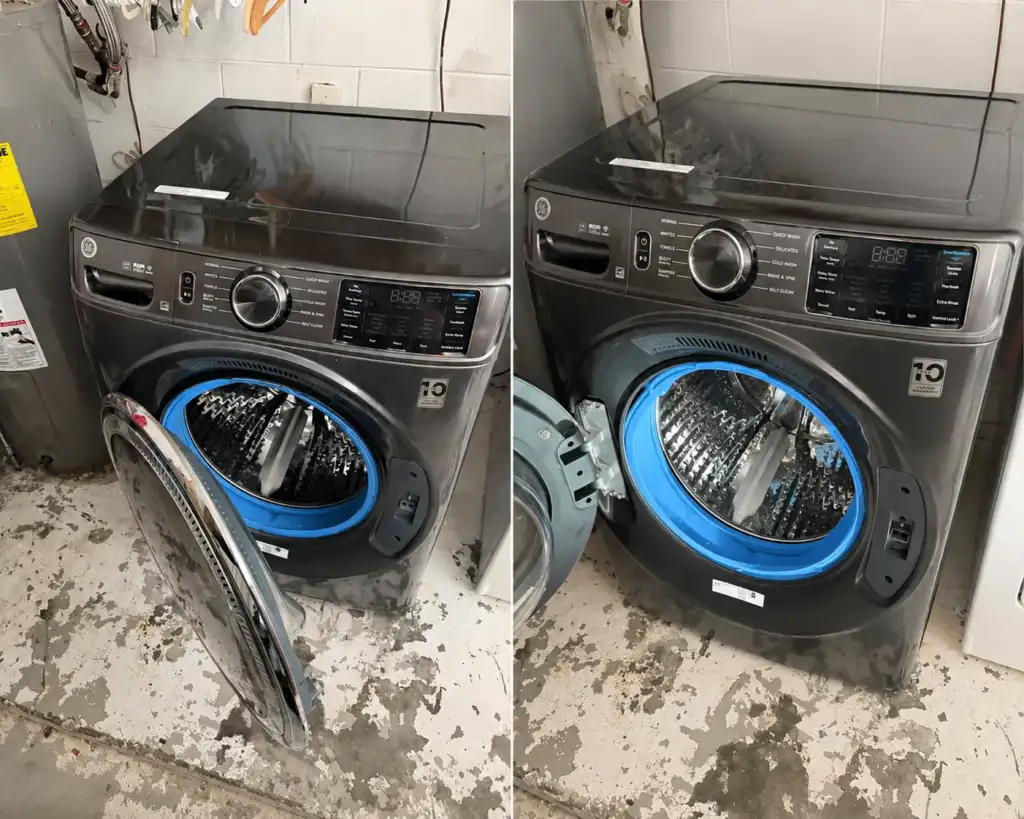
GE washer: leaking from the bottom
A damaged water supply line. Fixed for $160, parts and labor. A simple part, but finding which of several hoses leaks often means running the machine with the cabinet open.
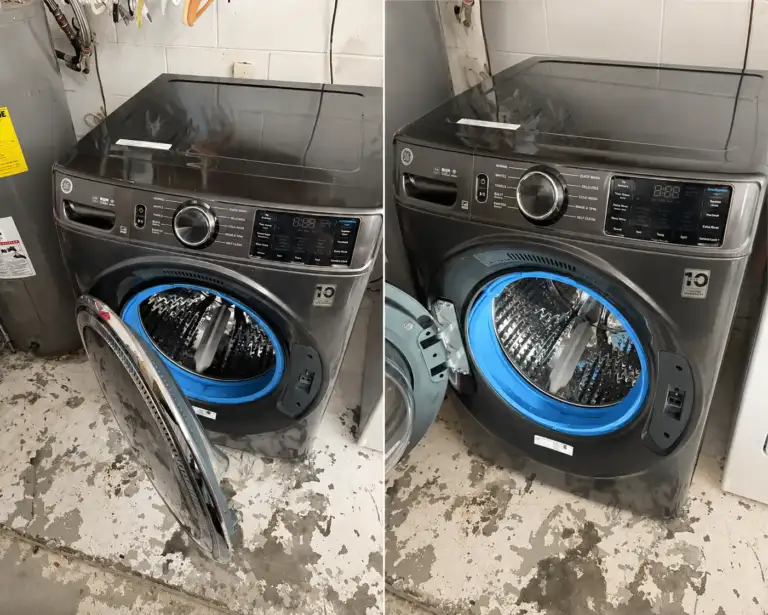
GE washer, Spring Crest Cir.
All four jobs are written up on our Tampa washer repair page.
Where DIY Washer Repair Goes Wrong
- Tearing a new door boot or losing a spring clamp inside the cabinet.
- Replacing the part that makes the noise but not the part it wore out, like the GE pulley.
- Ordering the wrong part for the exact model and revision; electrical parts are often not returnable.
- Running the machine with a hose not fully clamped and flooding the laundry room.
- Pinching a wire when refitting a panel, or touching a control board that still holds a charge.
- Calling a technician anyway after buying parts, which costs more than calling first.
A technician tests before replacing: motor and pump circuits, the door lock, the board outputs and the drive parts. That is why most of these jobs took one visit.
Washer still not right after the safe checks?
Same-day calls across Tampa, Clearwater, St. Petersburg, Sarasota and Bradenton, 8 AM to 7 PM on weekdays and 8 AM to 6 PM on weekends. The service call is free with any repair, and repairs carry a 90-day warranty.
Fixing a Washing Machine: Questions We Get
Can I fix my washing machine myself?
You can check the taps and hoses, clean the drain pump filter, level the machine, run a cleaning cycle and read the error code. Leaks under the machine, noises, spin problems and anything behind a panel should go to a technician.
Why is my front-load washer leaking from the door?
Usually a damaged door boot. On a Tampa Maytag it was replaced for $344 total; the job involves removing the door, clamps and often the front panel.
Why does my top-load washer squeal?
Often a failing actuator motor or worn transmission parts. On a Tampa GE both the motor and the pulley it wore down were replaced for $289.
How much does washer repair cost in Tampa?
Our four Tampa jobs on this page ran $150 to $344. You get the price before any work begins, and the service call is free with any repair.
My washer smells bad. Is it broken?
Often not. On a Tampa Maytag every part worked; the washer needed a full cleaning behind the drum for $150.

Andrew Teodor — Owner of Teodor Appliance Repair, with offices in Tampa, Bradenton, Clearwater, Sarasota and St. Petersburg. Every repair on this page comes from our own service records.
$25 OFF
with Online Application