

KitchenAid refrigerators are widely recognized for their premium engineering, sleek aesthetics, and innovative features. As a flagship brand under the Whirlpool Corporation umbrella, KitchenAid has built a strong reputation among homeowners who demand performance and style from their kitchen appliances. Yet even the most well-engineered refrigerator will eventually develop problems — and for Tampa Bay homeowners, the hot and humid Florida climate can accelerate wear on cooling systems significantly.
So, what is the most common problem with a KitchenAid refrigerator? Based on service data and technician experience, the single most reported issue is inadequate or failed cooling, though ice maker malfunctions, water leaks, unusual noises, and door seal failures are close behind. Understanding these issues — their causes, warning signs, and solutions — can help you act quickly before a minor problem becomes a costly repair or a complete appliance failure.
At Teodor Appliance Repair, we provide expert KitchenAid appliance repair throughout the Tampa Bay Area, including Tampa, Sarasota, Clearwater, Bradenton, and St. Petersburg. This guide is designed to help you identify what is wrong with your KitchenAid refrigerator and understand when it is time to call a professional.
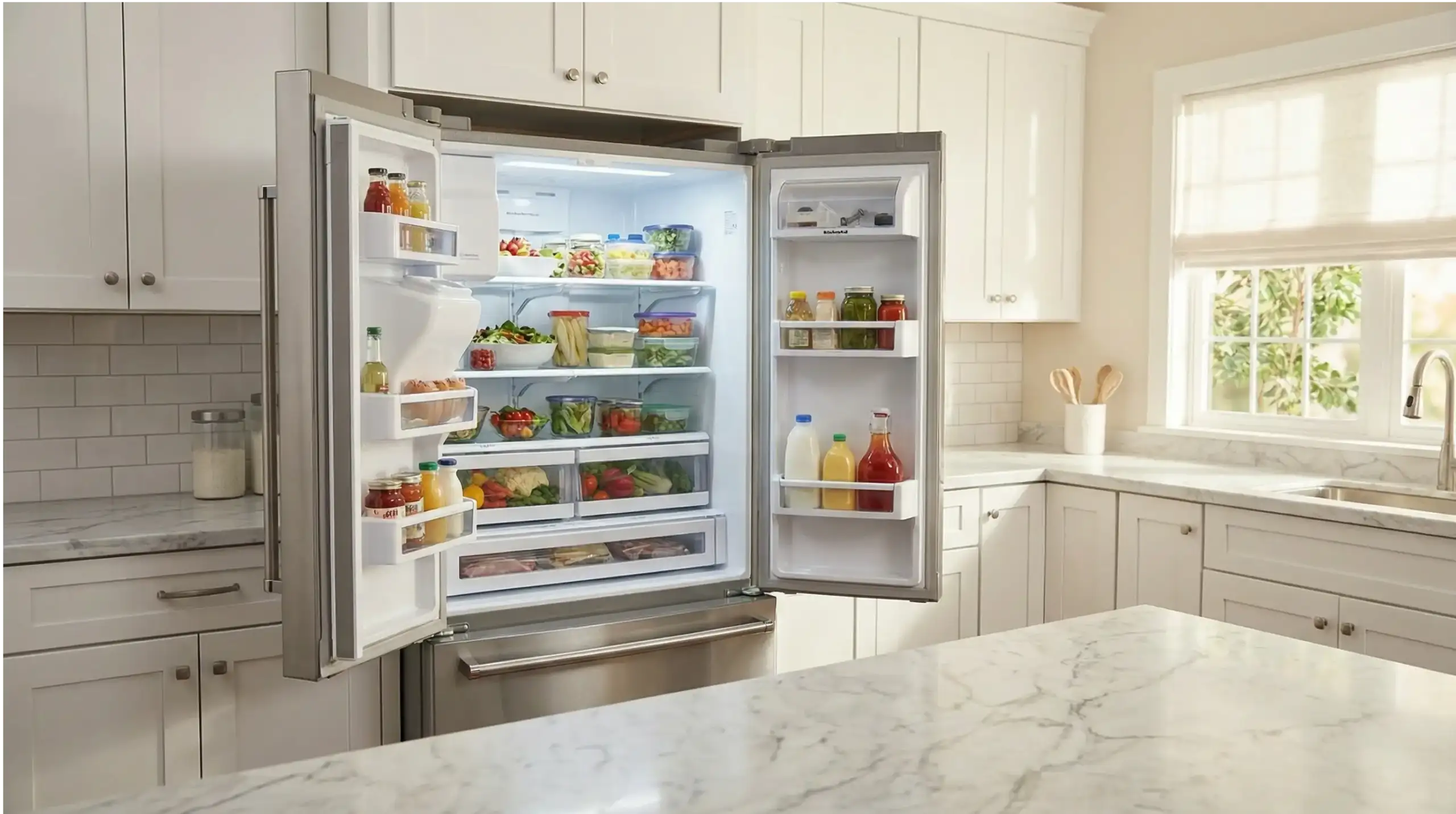
The #1 Most Common Problem: KitchenAid Refrigerator Not Cooling
Without question, the most frequently reported KitchenAid refrigerator problem is cooling failure — either the refrigerator stops cooling entirely, or it struggles to maintain a consistent, safe temperature. This issue can manifest in several ways: food spoiling faster than normal, the refrigerator feeling warm to the touch when you open the door, or the freezer remaining cold while the fresh food section does not.
In Tampa Bay’s climate, where ambient temperatures regularly exceed 90°F in summer, the refrigerator’s cooling system must work harder than in cooler regions. This additional strain makes cooling-related failures more common and more urgent.
What Causes a KitchenAid Refrigerator to Stop Cooling?
Several components can be responsible for cooling failure, and identifying the root cause requires a systematic diagnosis:
| Component | What It Does | How Failure Causes Cooling Problems |
| Condenser Coils | Release heat from the refrigerant | Dust and debris buildup insulates the coils, trapping heat and reducing efficiency |
| Evaporator Fan Motor | Circulates cold air through both compartments | A failed fan means cold air stays near the coils and does not reach food |
| Thermistor (Temperature Sensor) | Monitors internal temperature and signals the control board | Inaccurate readings cause the compressor and fan to run incorrectly |
| Defrost System | Melts frost off the evaporator coils periodically | A failed defrost heater or thermostat causes ice to block airflow entirely |
| Start Relay | Helps the compressor start its cycle | A faulty relay prevents the compressor from running, stopping all cooling |
| Compressor | Pumps refrigerant through the sealed system | A failing compressor is the most serious cause of cooling failure |
The most common and easiest to address is dirty condenser coils. In a home environment — especially one with pets — the coils located at the back or bottom of the refrigerator can become heavily coated with dust and hair within just a few months. Cleaning them annually is one of the most effective preventive maintenance steps a homeowner can take.
A failed evaporator fan motor is the second most frequent culprit. You can often diagnose this yourself: open the refrigerator door and listen. If you do not hear a fan running, or if the fan is making a grinding or squealing noise, the motor likely needs replacement.
Defrost system failures are particularly insidious because they develop gradually. Ice builds up on the evaporator coils over days or weeks, slowly restricting airflow until the refrigerator can no longer cool effectively. Common warning signs include frost buildup visible in the freezer, water pooling at the bottom of the refrigerator, and a warm fresh food section despite the freezer feeling cold.
KitchenAid Ice Maker Problems
The second most common category of KitchenAid refrigerator complaints involves the ice maker and water dispenser. KitchenAid refrigerators are known for their ice-making capabilities, but these systems involve multiple components — water inlet valves, supply lines, ice molds, and ejector motors — any of which can fail.
KitchenAid Refrigerator Not Making Ice
If your KitchenAid refrigerator has stopped producing ice, the most likely causes are:
- A frozen water supply line is one of the most frequent culprits. The small plastic tube that carries water from the household supply to the ice maker can freeze, particularly if the freezer temperature is set too low or if there is a defrost system problem. When the line is frozen, no water can reach the ice mold.A clogged or expired water filter is another common cause.
- KitchenAid recommends replacing the water filter every six months. A severely clogged filter restricts water flow to the point where the ice maker cannot fill its mold properly, resulting in no ice, small ice cubes, or hollow ice cubes.
- A faulty water inlet valve can also prevent ice production. This valve opens electronically to allow water into the ice maker. If the valve’s solenoid fails or the valve becomes clogged with mineral deposits — a common issue in areas with hard water — it will not open, cutting off the water supply entirely.
Ice Maker Leaking Water
A leaking ice maker is a problem that Tampa Bay homeowners should address immediately, as water on hardwood or tile floors creates both a safety hazard and a risk of water damage. The most common cause is a defective water inlet valve that does not close fully, allowing water to drip continuously. A clogged defrost drain can also cause water to overflow and pool inside the refrigerator before leaking onto the floor.
Unusual Noises from a KitchenAid Refrigerator
A properly functioning KitchenAid refrigerator produces a gentle hum as the compressor runs and a soft whoosh as the fans circulate air. Any noise that deviates significantly from this baseline warrants attention, as it often signals a component that is beginning to fail.
- Buzzing or loud humming typically indicates a problem with the condenser fan motor or compressor. When the condenser fan motor’s bearings wear out, it produces a loud buzzing or rattling sound. A failing compressor may hum loudly as it struggles to maintain pressure.
- Clicking sounds — particularly a rapid clicking followed by silence — are a classic symptom of a faulty start relay. The start relay is a small, inexpensive component that gives the compressor the electrical boost it needs to start. When it fails, the compressor attempts to start, clicks, and shuts off without completing its cycle. This pattern repeats every few minutes and is usually accompanied by the refrigerator failing to cool.
- Rattling or vibrating can often be resolved by ensuring the refrigerator is properly leveled and that the drain pan underneath the unit is seated correctly. However, persistent rattling can also indicate ice buildup interfering with the evaporator fan blades, which is a sign of a defrost system problem.
Addressing unusual noises early is important because they often precede more serious failures. A refrigerator that makes noise today may stop cooling entirely tomorrow. For context on how these issues relate to your appliance’s overall health, see our guide on the average lifespan of a refrigerator.
Water Leaks Inside and Around the Refrigerator
Water leaks are among the most common repairs on a refrigerator across all brands, and KitchenAid is no exception. The two most common sources of leaks are:
- A clogged defrost drain is the leading cause of water pooling inside the refrigerator, typically at the bottom of the fresh food compartment or beneath the crisper drawers. During the automatic defrost cycle, water melts off the evaporator coils and flows down a drain tube to a pan beneath the refrigerator. If this drain becomes clogged with food particles or ice, the water has nowhere to go and pools inside the unit.
- Damaged or worn door gaskets allow warm, humid air to enter the refrigerator. In Florida’s climate, this warm air carries significant moisture, which condenses inside the refrigerator and can create the appearance of a water leak. Inspecting the door gaskets regularly — looking for cracks, tears, or areas that do not seal tightly — is an important part of refrigerator maintenance.
Door Seal and Structural Problems
The rubber door gaskets on a KitchenAid refrigerator serve a critical function: they create an airtight seal that keeps cold air in and warm air out. When these gaskets fail, the consequences extend beyond simple water leaks.
A refrigerator with compromised door seals must run almost continuously to compensate for the constant influx of warm air. In the Tampa Bay area, where outdoor humidity regularly exceeds 80%, this problem is especially pronounced. The compressor, which is the most expensive component in the refrigerator, is subjected to excessive wear, dramatically shortening the appliance’s lifespan.
You can test your door gaskets with a simple paper test: close the refrigerator door on a piece of paper and try to pull it out. If the paper slides out easily, the gasket is not sealing properly and should be replaced.
KitchenAid Refrigerator Electrical and Sensor Problems
Modern KitchenAid refrigerators rely heavily on electronic control boards and sensors to manage temperature, defrost cycles, and component operation. When these systems malfunction, the symptoms can be confusing and difficult to diagnose without professional tools.
Control board failures can cause a wide range of erratic behaviors, including the refrigerator not cooling, the ice maker not working, or the unit shutting off unexpectedly. Because the control board governs so many functions, a single failure can present as multiple different problems simultaneously.
Thermistor malfunctions cause the refrigerator to misread its internal temperature. If the thermistor reads the temperature as colder than it actually is, the compressor and fans will not run enough, and the refrigerator will gradually warm up. Conversely, if it reads the temperature as warmer than it is, the compressor will run constantly, wasting energy and accelerating wear.
Preventive Maintenance Tips for Tampa Bay KitchenAid Owners
Given the demanding climate of the Tampa Bay Area, proactive maintenance is especially important for KitchenAid refrigerator owners. The following practices can significantly extend the life of your appliance and reduce the likelihood of unexpected breakdowns:
- Clean the condenser coils every six months. In Florida’s dusty environment, coils can become clogged more quickly than in cooler climates. Use a vacuum with a brush attachment or a coil cleaning brush to remove dust and debris from the coils at the back or bottom of the refrigerator.
- Replace the water filter every six months. A fresh water filter ensures proper water flow to the ice maker and water dispenser, preventing blockages and maintaining water quality.
- Inspect door gaskets monthly. Check for cracks, tears, or areas where the gasket does not lie flat against the refrigerator frame. Clean the gaskets with mild soap and warm water to remove food residue that can cause them to stick or deteriorate.
- Maintain proper temperature settings. Keep the fresh food compartment between 37°F and 40°F and the freezer at 0°F. Temperatures outside these ranges can cause food safety issues and put unnecessary strain on the cooling system.
- Allow adequate ventilation. Ensure there is at least one inch of clearance on the sides and top of the refrigerator, and at least two inches at the back, to allow heat to dissipate from the condenser coils.
When Should You Call a Professional for KitchenAid Refrigerator Repair?
While some basic maintenance tasks are within the capability of most homeowners, the majority of KitchenAid refrigerator repairs require professional expertise. Modern refrigerators use sealed refrigerant systems, complex electronic controls, and high-voltage components that can be dangerous to handle without proper training and equipment.
You should contact a professional appliance repair technician immediately if you notice any of the following:
- The refrigerator is not cooling despite the compressor running.
- Food is spoiling faster than usual.
- There is a persistent water leak inside or beneath the refrigerator.
- The refrigerator is making loud clicking, grinding, or buzzing noises.
- The ice maker has completely stopped producing ice.
- The refrigerator shuts off unexpectedly or runs continuously without cycling off.
- There is visible frost buildup on the back wall of the freezer.
Attempting to repair sealed system components — such as the compressor or refrigerant lines — without proper certification is not only dangerous but is also illegal under EPA regulations. For issues involving the control board, start relay, or defrost system, professional diagnosis ensures the correct component is replaced the first time, saving you both time and money.
Common KitchenAid Refrigerator Problems at a Glance
| Problem | Most Likely Cause | DIY or Professional? |
| Refrigerator not cooling | Dirty condenser coils, failed evaporator fan, defrost system failure | DIY for coil cleaning; Professional for fan/defrost |
| Ice maker not making ice | Frozen water line, clogged filter, faulty inlet valve | DIY for filter; Professional for valve/line |
| Water leaking inside | Clogged defrost drain, damaged door gasket | DIY for drain flush; Professional for complex leaks |
| Loud clicking noises | Faulty start relay | Professional |
| Loud buzzing/humming | Condenser fan motor, failing compressor | Professional |
| Refrigerator running constantly | Worn door gaskets, dirty coils, defrost failure | DIY for gaskets/coils; Professional for defrost |
| Frost buildup in freezer | Defrost heater or thermostat failure | Professional |
| Water dispenser not working | Clogged filter, frozen line, faulty inlet valve | DIY for filter; Professional for valve/line |
Teodor Appliance Repair: Expert KitchenAid Refrigerator Repair in Tampa Bay
When your KitchenAid refrigerator needs professional attention, Teodor Appliance Repair is the trusted choice for homeowners across the Tampa Bay Area. Our certified technicians have extensive hands-on experience with all KitchenAid refrigerator models, from French door and side-by-side units to built-in and counter-depth configurations.
We offer transparent pricing, same-day service availability, and a commitment to quality repairs that last. Whether you are dealing with a cooling failure, a malfunctioning ice maker, or any of the other common KitchenAid refrigerator problems described in this guide, our team is ready to diagnose and resolve the issue efficiently.
Serving the Entire Tampa Bay Area
No matter where you are in the Tampa Bay region, a Teodor Appliance Repair technician is close by and ready to help. We have local offices in Tampa, Sarasota, Clearwater, Bradenton, and St. Petersburg — so fast, reliable service is never far away.
Call us today at (863) 594-1784 to schedule your KitchenAid refrigerator repair appointment. Our team is available seven days a week to get your appliance back in working order as quickly as possible.
Frequently Asked Questions (FAQ)
OTHER ARTICLES
Contact Us For KitchenAid Refrigerator Repair in Tampa, FL
Call us today: (863) 594-1784
or fill out the form and we will contact you ourselves.