

Every major appliance in your home — your refrigerator, washer, dryer, dishwasher, oven — is a significant investment. And like any investment, it has a lifespan. Knowing how long your appliances are designed to last helps you plan for repairs, budget for replacements, and make smarter decisions when something breaks down.
So, what is the average life of an appliance? According to industry data, most major household appliances last between 9 and 19 years, depending on the type, brand, usage habits, and how well they are maintained. For homeowners in the Tampa Bay Area, Florida’s hot and humid climate adds an extra layer of wear that can shorten that window — making regular maintenance and timely professional repairs even more important.
At Teodor Appliance Repair, we are your trusted appliance repair Tampa specialists, serving the entire Tampa Bay region with honest diagnostics, fast service, and lasting repairs. Whether your appliance is approaching the end of its life or just needs a tune-up, this guide will help you understand what to expect from every major appliance in your home.
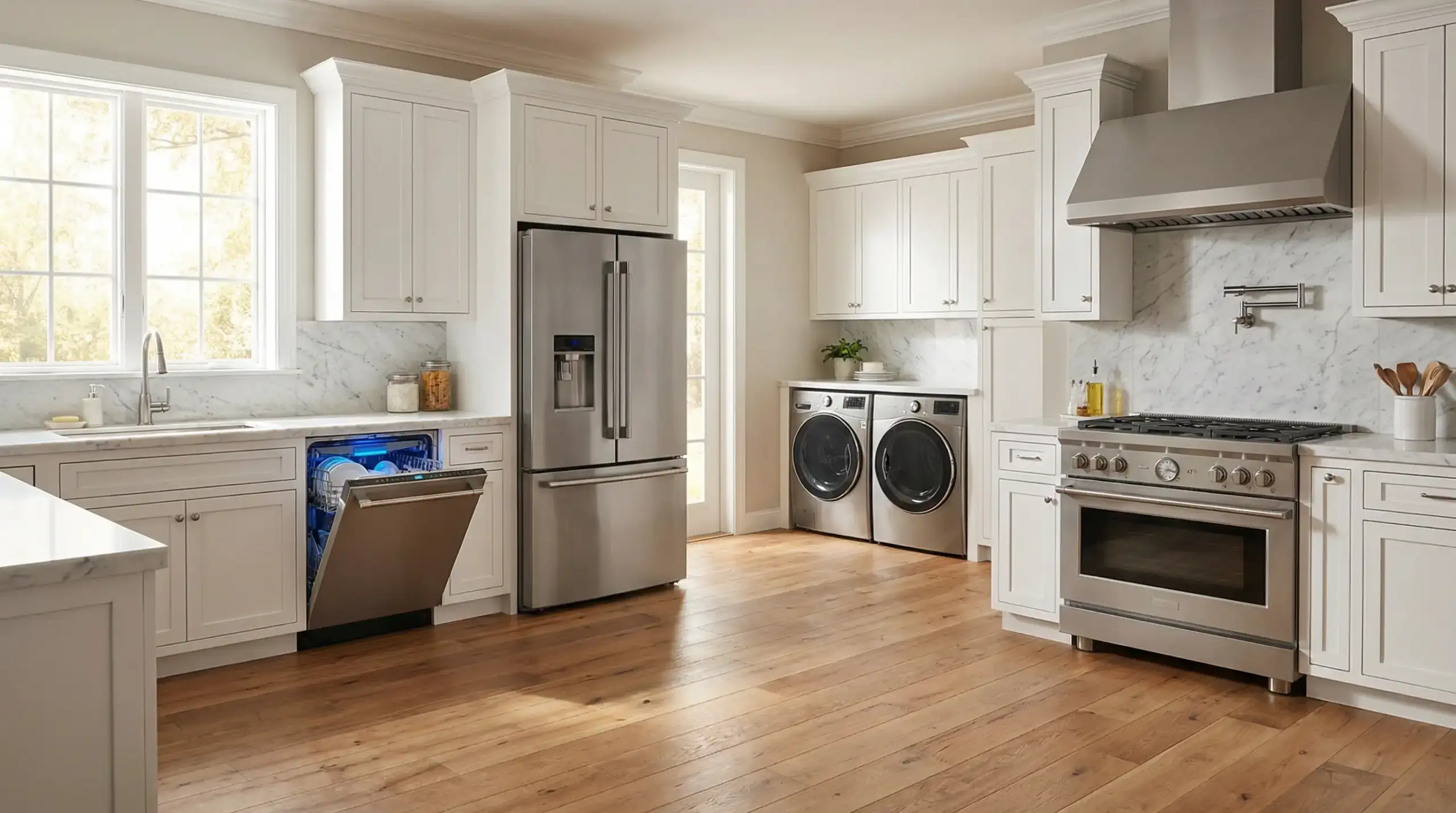
Average Lifespan of Major Home Appliances
The table below summarizes the expected lifespan of the most common household appliances, based on data from the Association of Home Appliance Manufacturers and industry service records.
| Appliance | Average Lifespan | Typical Lifespan Range |
| Gas Range / Stove | 15–19 years | 15–23 years |
| Electric Range / Stove | 13–16 years | 13–20 years |
| Refrigerator (Standard) | 12–14 years | 10–18 years |
| Freezer (Standalone) | 14–16 years | 12–20 years |
| Washing Machine | 10–12 years | 8–16 years |
| Dryer (Electric) | 12–14 years | 11–18 years |
| Dryer (Gas) | 11–13 years | 11–16 years |
| Dishwasher | 9–12 years | 9–16 years |
| Microwave Oven | 7–9 years | 5–10 years |
| Vent / Range Hood | 11–14 years | 9–19 years |
| Compact Refrigerator | 6–8 years | 4–12 years |
These figures represent appliances that receive average use and basic maintenance. Appliances that are heavily used, poorly maintained, or subjected to extreme conditions — such as the heat and humidity common throughout the Tampa Bay Area — may fall toward the lower end of these ranges.
Appliance Lifespan Breakdown: What You Need to Know
Refrigerators: 10–18 Years
The refrigerator is arguably the hardest-working appliance in any home, running 24 hours a day, seven days a week, every day of the year. A standard full-size refrigerator has an average lifespan of 12 to 14 years, though well-maintained units can last up to 18 years. French door and side-by-side models, which feature more complex electronics and mechanisms, tend to fall toward the lower end of this range.
In Florida’s climate, the refrigerator’s compressor and condenser system must work significantly harder than in cooler states, which can accelerate wear on key components. Regular condenser coil cleaning — ideally every six months in Tampa Bay — is one of the most effective ways to extend your refrigerator’s life. For a deeper look at refrigerator-specific lifespan factors, see our dedicated guide on the average lifespan of a refrigerator.
Washers and Dryers: 10–14 Years
Washing machines and dryers typically last between 10 and 14 years. Front-load washers, while more energy-efficient, tend to have more complex mechanics and may require more frequent repairs than top-load models. Dryers — both gas and electric — are generally among the more durable appliances in the home, provided the exhaust vent is kept clean. A clogged dryer vent is not only a fire hazard but also forces the appliance to work harder on every cycle, significantly shortening its lifespan.
Dishwashers: 9–12 Years
The dishwasher has one of the shorter average lifespans among major kitchen appliances, typically lasting 9 to 12 years. The combination of heat, water, and detergent creates a demanding operating environment that gradually degrades seals, pumps, and spray arms. Running full loads, using the correct detergent, and cleaning the filter regularly are the most impactful maintenance habits for extending dishwasher life.
Ranges, Ovens, and Cooktops: 13–19 Years
Gas ranges are among the longest-lasting appliances in the home, with an average lifespan of 15 to 19 years. Electric ranges follow closely at 13 to 16 years. The relative simplicity of their core heating mechanisms — compared to the sealed refrigerant systems in refrigerators — contributes to their longevity. However, electronic ignition systems, control boards, and self-cleaning mechanisms can fail before the appliance itself reaches the end of its mechanical life.
Factors That Affect How Long an Appliance Lasts
Understanding the average lifespan of an appliance is only part of the picture. Several key factors determine whether your specific appliance reaches — or exceeds — that average:
- Maintenance habits are the single most controllable factor. Appliances that receive regular cleaning, filter replacements, and professional check-ups consistently outlast those that are neglected. Something as simple as cleaning the lint trap after every dryer load or descaling a dishwasher twice a year can add years to an appliance’s life.
- Usage frequency and load play a significant role. A dishwasher run twice a day in a large family home will wear out faster than one run three times a week in a single-person household. Similarly, a refrigerator that is opened and closed dozens of times daily will experience more wear on its door seals, hinges, and compressor than one used more sparingly.
- Brand and build quality matter considerably. Premium appliance brands use higher-grade components and more rigorous quality control, which translates to longer lifespans and fewer mid-life failures. Budget appliances may cost less upfront but often require repairs sooner and may not be worth repairing when they do fail.
- Climate and environment are particularly relevant for Tampa Bay homeowners. The combination of high ambient temperatures and humidity forces cooling appliances — refrigerators, freezers, and air-conditioned spaces — to work harder year-round. Humidity also accelerates corrosion on metal components and can degrade rubber seals and gaskets more quickly than in drier climates.
Prompt repairs are one of the most overlooked factors. A small problem left unaddressed almost always becomes a larger, more expensive one. A refrigerator with a failing start relay that is ignored will eventually damage the compressor — turning a $75 repair into a $400–$600 one. Calling a professional Tampa appliance repair technician at the first sign of trouble is one of the best investments you can make in your appliance’s longevity.
When to Repair vs. When to Replace
Knowing the average lifespan of your appliance gives you a critical reference point when deciding whether to repair or replace a failing unit. A useful framework is the 50/50 Rule: if the cost of a repair exceeds 50% of the cost of a comparable new appliance, replacement is generally the more sensible choice. For a full breakdown of this decision-making framework, read our guide on the 50/50 Rule for appliances.
In practical terms, this means that the age of the appliance matters enormously. An appliance in the first half of its expected lifespan is almost always worth repairing, even for moderately expensive fixes. An appliance that has already exceeded its average lifespan and requires a major repair — such as a compressor replacement on a 15-year-old refrigerator — is likely better replaced.
The following general guidelines apply for most Tampa Bay homeowners:
- Repair is usually the right choice when the appliance is less than halfway through its expected lifespan, the repair cost is less than 50% of a new unit’s price, the appliance is a premium or high-end model with significant remaining value, or the issue is a single, clearly identified component failure.
- Replacement is usually the right choice when the appliance has exceeded its average lifespan, it has required multiple repairs in the past two years, the repair cost approaches or exceeds half the cost of a new comparable unit, or the appliance is significantly less energy-efficient than modern equivalents.
How Tampa Bay’s Climate Shortens Appliance Life
Florida’s subtropical climate is beautiful, but it is genuinely hard on home appliances. The Tampa Bay Area averages over 240 sunny days per year, with summer temperatures regularly exceeding 90°F and humidity levels that can stay above 80% for weeks at a time. This environment creates specific challenges:
- Cooling appliances — refrigerators, freezers, and wine coolers — must run more frequently and for longer cycles to maintain safe internal temperatures when the surrounding air is already warm. This continuous operation accelerates wear on compressors, fan motors, and condenser coils.
- High humidity accelerates the deterioration of rubber door gaskets and seals across all appliances. A gasket that might last 10 years in a dry climate may begin cracking or losing its seal in 5 to 7 years in Tampa Bay. Replacing worn gaskets promptly is essential to preventing the cascading failures that follow when warm, moist air infiltrates a refrigerator or dishwasher.
- Salt air, particularly in coastal communities like Clearwater, St. Petersburg, and Sarasota, can accelerate corrosion on metal components, especially on appliances located in garages or near exterior walls.
Tips to Maximize Your Appliance’s Lifespan
Regardless of which appliances you own, the following maintenance practices will help you get the most years — and the most value — out of every unit in your home:
- Schedule annual professional maintenance. Just as you service your car annually, having a qualified appliance technician inspect your major appliances once a year can catch developing problems before they become failures. At Teodor Appliance Repair, we offer professional maintenance services across all of Tampa Bay.
- Clean condenser coils on refrigerators and freezers every six months. In Florida’s dusty, humid environment, coils clog faster than in cooler climates. Clogged coils are the leading cause of premature compressor failure.
- Inspect and replace door gaskets proactively. Check the seals on your refrigerator, dishwasher, and oven door annually. A simple paper test — closing the door on a piece of paper and checking whether it holds — can tell you whether a gasket needs replacing.
- Clean dryer vents annually. A clogged vent is both a fire hazard and a major contributor to premature dryer failure. Professional vent cleaning is inexpensive and can add years to your dryer’s life.
- Replace water filters on schedule. Refrigerators and dishwashers with water filtration systems should have their filters replaced every six months. A clogged filter forces pumps and valves to work harder, shortening their lifespan.
Address unusual noises, leaks, or performance changes immediately. These are early warning signs that a component is beginning to fail. Prompt professional diagnosis almost always results in a less expensive repair than waiting until the appliance stops working entirely.
Teodor Appliance Repair: Serving All of Tampa Bay
When your appliances need professional attention — whether for a repair, a maintenance check, or an honest assessment of whether it is worth fixing — Teodor Appliance Repair is here to help. We are a locally owned and operated appliance repair Tampa company with deep roots in the Tampa Bay community and experience servicing all major appliance brands.
Our technicians are available seven days a week, provide transparent upfront pricing, and stand behind every repair we perform. No matter where you are in the Tampa Bay region, we have a location close to you. We have local offices in Tampa, Sarasota, Clearwater, Bradenton, and St. Petersburg — so fast, reliable service is never far away. Call us today at (863) 594-1784 to schedule an appliance repair or maintenance appointment. Our team is ready to help you get the most out of every appliance in your home.
Frequently Asked Questions (FAQ)
OTHER ARTICLES
Contact Us For Appliance Repair Service in Tampa, FL
Call us today: (863) 594-1784
or fill out the form and we will contact you ourselves.